Menu

Mombasa City tour

8 Hours

Discover the culture, origins, and fun of Mombasa.

Here you can explore Mombasa’s exotic markets for personal treasures. Then tour the city’s Arabic and Portuguese past and witness their present-day influence on this colorful metropolis.

The diversity of Mombasa is remarkable, making the city unlike any other in Kenya, with a unique cultural blend of Africans, Arabs, and Asians representing many religious belief systems, including Christian, Muslim, Buddhist, and Hindu. Touring the city not only allows you to see the architecture and learn about the cultures, but you also gain a deep understanding of the historical foundation of the ethnic diversity that makes Mombasa one of the most interesting destinations in Africa, such as how Afro-Asians and Afro-Arabs, including the Swahilis, have been living on the coast of East Africa for more than 500 years.

Stops on the trip include local bazaars, Fort Jesus, visits to the handicraft carvers, and the Mackinnon Market. The first stop on the excursion, Fort Jesus, was built in 1593 based on designs by an Italian architect and engineer named Joao Batista Cairato. Originally used by the Portuguese, the imposing structure rests upon a coral ridge at the entrance of the old town harbor, and its strategic location has resulted in many battles for its control.

The site has also been used as soldier barracks and a prison before being obtained by the Trustees of the Kenya National Museum in 1958, and the on-site museum was opened in 1962. After the fort, your AfricanMecca guide leads you into alleys of Old Town, the original Mombasa city that was built in the 13th century and still maintains many significant architectural features of the time, such as filigree timber balconies, beautifully carved wooden doors, Indian and colonial designs, and more than 20 mosques, and in 1985, the area received protected status as a conservation project to preserve the historically significant buildings.

Thereafter, your tour guide then takes you to Mackinnon Market and the shops on Langoni Road, where you find a fascinating variety of goods, including produce, such as fruits and vegetables from local farms; meats; textiles; and even some unexpected items, both local and international, such as safari shoes by Bata, pseudo designer label jeans, and unbranded clothing from western countries.

Trip Info

  • Included
  • All Year
  • Guided
  • Available
  • Available
  • Lunch

Itinerary

> :
Pickup

After breakfast at your hotel/residence, we pick you up and drive to Mombasa town

> :
Akamba handcraft

Visit the Akamba handicraft (where you will learn about the wood carvings). Akamba handcraft is one of the largest wood carving industries and markets in Kenya.

> :
Hindu temple

Visit the Hindu temple—one of the many symbols of Mombasa’s cultural diversity.

The temple is a popular tourist spot, and a tour can be taken inside the temple, with a historical background of the temple given by one of the temple gurus. Extravagant idols and stone carvings of various religious beliefs are displayed within the temple and on its walls. It is located near the railway station just outside the perimeter of the downtown area.

> :
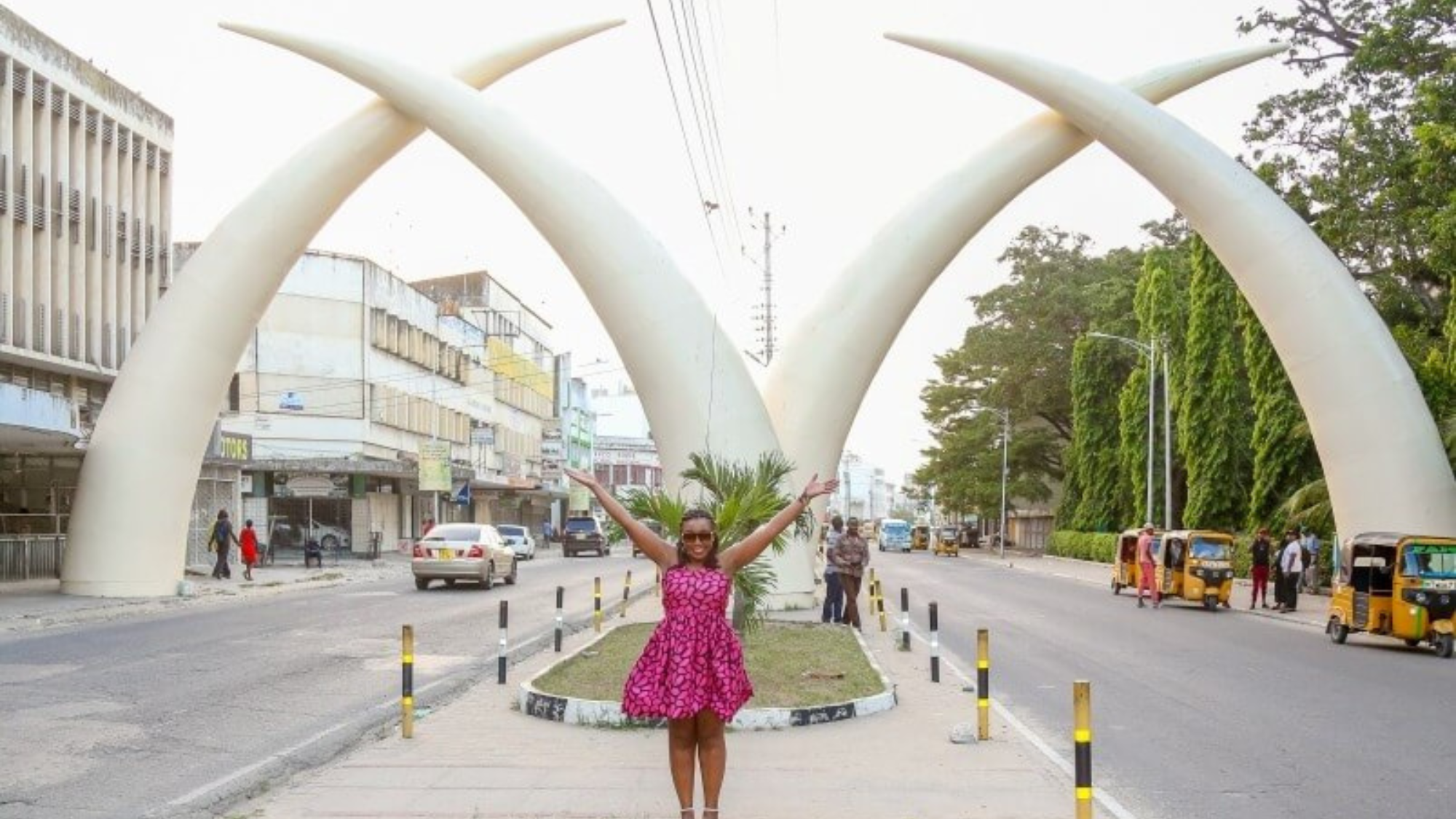
Mombasa “Tusks”

Next, we explore the Mombasa “Tusks” – symbolic representations of entrance into the heart of the town. The tusks were built to commemorate the visit of Queen Elizabeth to the town in 1952, as they lay directly on the path from the port to the town.

Ivory was considered to be an exquisite commodity during the time, and in essence, the tusks were meant to embrace the Queen and the British Empire into the town and within its social structure. Coincidentally the tusks also spell the letter “M” for Mombasa.

> :
Fort Jesus Museum

Visit the Fort Jesus Museum – Mombasa’s most popular tourist attraction. The fort, located along the coastline near the Old Town, is a monumental piece of architecture that was built in the 16th century by the Portuguese.

The fort has a museum that displays various artifacts from the era when Mombasa served as a transit point for the slave trade and commodities, and which enjoyed regular visits by seafarers and the like. Its interior comprises torture rooms and prison cells where slaves were kept in captivity before being traded.

Weapons such as canons, which were used to defend the fort from invading foreigners and rioting locals, can be seen both inside and outside the fort.

> :
Old Town

You will also explore the “Old Town” – the part of Mombasa that is reminiscent of the days when the Arabs exerted a heavy influence on the town and its culture, especially in the architecture and language (Kiswahili has a lot of phrases derived from various Arabic dialects).

It is well known for its ancient buildings, extravagant art designs, and curio shops that sell antique and popular Kenyan souvenirs. Old Town is best seen when explored on foot with an experienced guide, as the streets are too narrow to accommodate many vehicles. The town’s inhabitants are mostly of Arab origin whose forefathers once roamed the same streets of the town.

> :
Mwembe Tayari open-air market

Proceed to the Mwembe Tayari open-air market where you will learn about the food spices, foods, and vegetables. Meet different traders buying and selling different types of goods. Proceed for lunch at the centre of Mombasa city or by request, at Tamarind restaurant which is built on the shores of the Indian Ocean on the northern coast.

> :
Haller Park

After lunch, visit Haller Park (formerly Bamburi Nature Trail) – the largest animal sanctuary in Mombasa. Located in Bamburi next to the Cement Factory, the park boasts an enormous variety of animals, reptiles, insects, and botanical gardens.

Walking along the trail is the ideal way to look at the various animals, and on many occasions holding or feeding a reptile such as a snake is allowed under the close supervision of a guide. Educational videos are also shown, with emphasis on the history and continuous improvement of the trail.

The park is home to buffaloes, eland antelopes, giraffes, waterbucks, oryxes, snakes, crocodiles, hippos, tortoises, and different types of bird species. It was previously a barren piece of land that had been stripped of its resources through limestone mining and was redeveloped through reforestation and conservation efforts.

Today it is a habitat for a large number of flora and fauna species.

> :
Drop Off

In the late afternoon, board your transport to be dropped off at your beach hotel or cottage.

You can send your enquiry via the form below.

Mombasa City tour