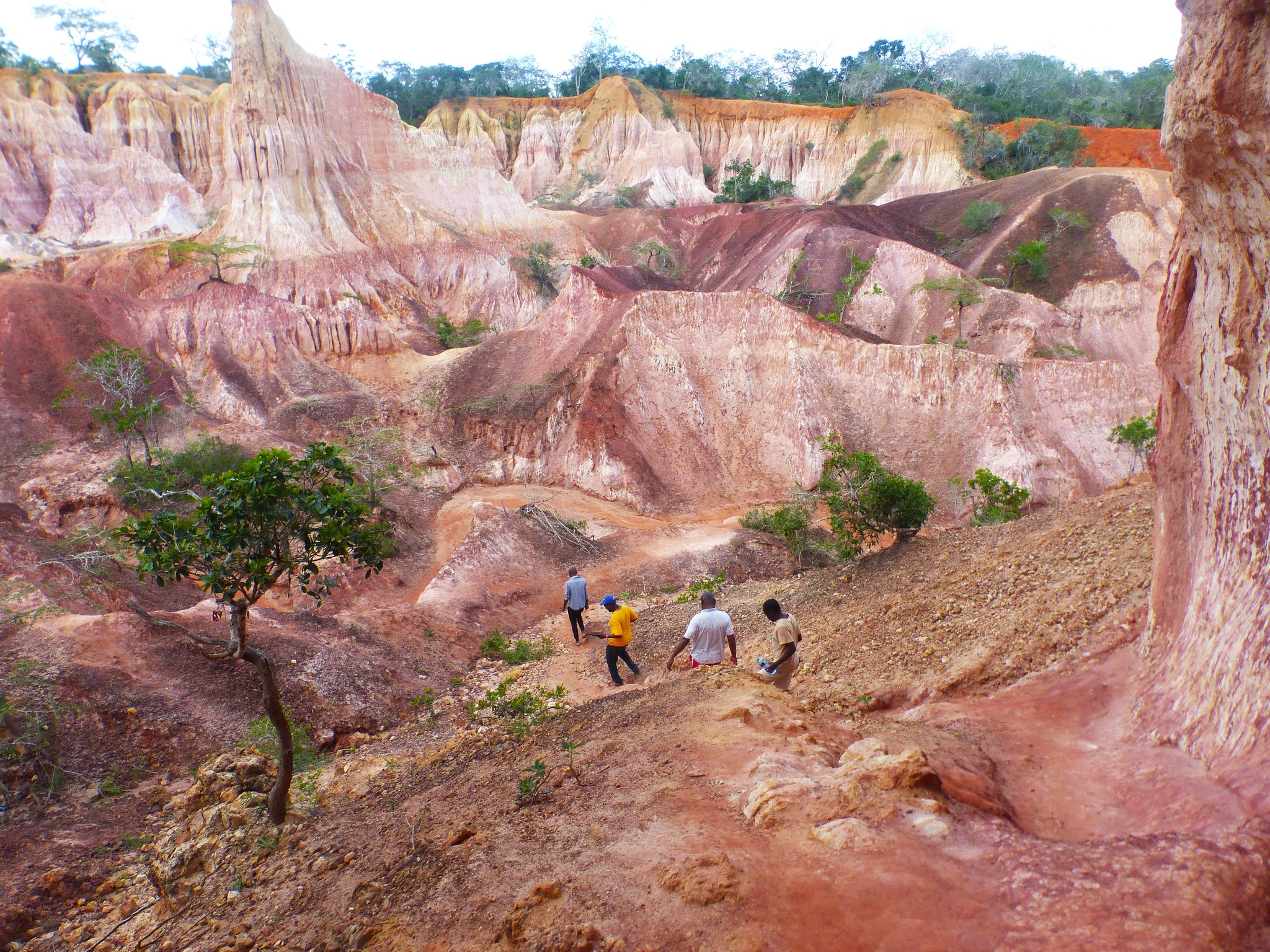
Marafa Hells Kitchen is the inland counterpart to the Mambrui dunes: a red-and-white sandstone canyon that looks more like Mars than the Kenyan coast. Locals call it Nyari — “the place that broke by itself.” At sunset, the walls glow orange and crimson, which is why most visitors time the trip for late afternoon
It sits in Magarini Sub-County, Kilifi, about 30–40 km from Malindi and roughly 45–60 minutes by road. Many travelers combine it with Mambrui Sand Dunes on the same day
What Is Marafa Hell’s Kitchen?The site is an eroded sandstone depression. Wind and seasonal rain have carved gullies, pillars, and “melted candle” formations into layered rock. Colors run from white and pink to orange and deep red. Scientists describe a pocket of softer sandstone that wears away faster than the surrounding land. Local Giriama tradition tells a different story.
The best-known legend is of a wealthy family that bathed in cow’s milk while neighbors went hungry. God sank their homestead into the earth. The white bands are said to be the milk; the red bands, the blood. Another version speaks of a town that ignored a warning to move, leaving only the gorge behind. The site still has spiritual meaning for some Kaya elders.
The nickname “Hells Kitchen” comes from the heat. Inside the depression, midday temperatures are often described as reaching around 50°C. That is why guides push sunset visits so hard.
How to Get to Marafa Hells KitchenFrom Malindi
Drive west on the Malindi–Tsavo / inland road. After about 25 km look for Marafa signage, then follow the murram (dirt) stretch of roughly 13 km to the gate. A sedan can manage it in dry weather; a 4×4 is more comfortable after rain. Search “Hell’s Kitchen Marafa” on Google Maps.
Public transport
Matatus leave from Malindi (old town market / Mombasa Road stage) to Marafa village for about KSh 200–250. From the village it is a short walk or a KSh 50 boda boda to the entrance. Matatus are cheap but poorly timed for sunset; the last ones back often leave too early.
Taxi, tuk-tuk, or tour
A return taxi from Malindi is commonly quoted in the KSh 4,000–9,000 range depending on vehicle and waiting time. Tuk-tuks are used too, though the inland road is longer and dustier than the Mambrui hop. Hotels in Malindi and Watamu sell half-day sunset tours (often US$90–120 per person) that include transport, entry, and a guide. Combo trips with Mambrui or Robinson Island are widely offered.
From Watamu
Add the drive to Malindi first; total time is about 1–1.5 hours.
The canyon is community-managed, and fees support local programs. Published figures vary by year and whether you arrive independently or on a package. Typical on-site charges reported recently:
| Category | Typical fee |
|---|---|
| Kenyan / EAC adult | KSh 200 |
| Kenyan / EAC child | KSh 100 |
| Non-resident adult | KSh 500 |
| Non-resident child | KSh 250 |
| Local guide (per group) | About KSh 500 |
Things to Do at Marafa Hells Kitchen: Guided canyon walk
This is the main activity. A local guide leads you along the rim and down into the sandstone maze for 45–60 minutes. The walk is short but uneven, sandy, and exposed. Closed shoes beat flip-flops.
Sunset from the rim
After the walk, most groups climb back to a viewpoint and wait. Low sun turns the cliffs gold, then fire-red. Arrive by about 4:00–4:30 p.m. if you want time in the canyon and the light show.
Photography
Layered walls, isolated pillars, and the contrast of green bush against red rock photograph well. Golden hour is clearly better than harsh midday light. Check drone rules on site.
Combine with Mambrui
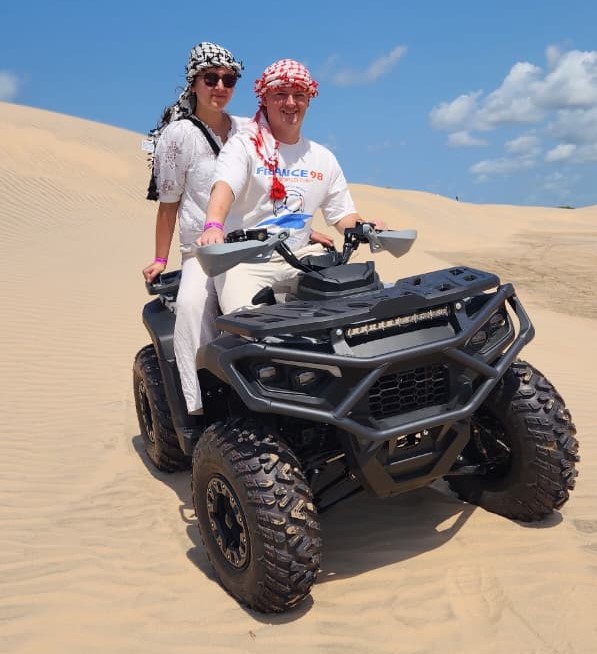
A common circuit is dunes and quads in the morning or early afternoon, then Marafa for sunset. The landscapes feel completely different: desert-ocean at Mambrui, inland canyon at Marafa.Facilities are basic. Expect little shade, limited drinks, and a rural setting. Carry more water than you think you need.
Best Time to VisitLate afternoon — roughly 2:30 p.m. onward, with sunset as the climax — is the standard advice. Early morning is cooler and quieter but less theatrical in color. Avoid 11:00 a.m. to 2:00 p.m. if you can. Dry months (roughly January–March and July–October) make the dirt road easier and the views clearer. Rain can rut the last stretch.
What to Bring
- Closed shoes and a hat
- Sunscreen and sunglasses
- At least one litre of water per person
- Cash for entry, guide, and tips
- Light, breathable clothes
The heat and dust are real. The payoff is a landscape that does not look like anywhere else on the Kenyan coast.Marafa Hell’s Kitchen works as a half-day trip from Malindi or Watamu, or as the second act after Mambrui. Go for the geology, stay for the Giriama stories, and time it so the canyon is still lit when the sun drops.