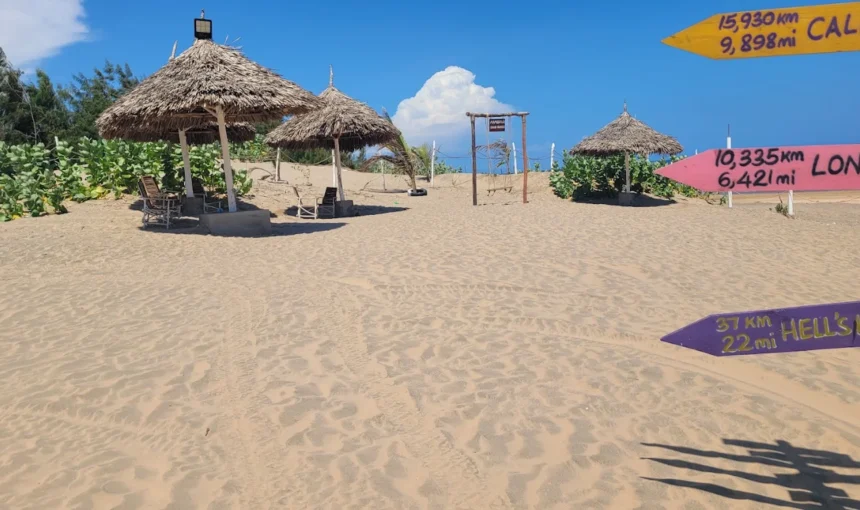
Most Kenya coast itineraries stop at Watamu or Malindi. That is a mistake. Just 20 to 40 minutes north of Malindi, past the Sabaki River bridge and a line of giant baobabs, the landscape changes. Golden dunes roll into the Indian Ocean. The beach is wide, empty, and glittering. Locals call it Dubai Ndogo—Little Dubai.
A Mambrui day trip is one of the most distinctive experiences on the Kenyan coast: desert scenery and wild beach in the same frame, plus a surprisingly deep history that most visitors never hear about.
Where Is Mambrui?
Mambrui sits in Magarini Sub-County, Kilifi County, on the Malindi–Lamu highway. It is a small Swahili fishing settlement of a few thousand people, south of Gongoni and north of Malindi. The sand dunes occupy about 700 hectares and stretch roughly 10 km, from the Sabaki (Galana) river mouth toward Ngomeni and Che Shale.
The dunes are not ancient desert. Wind carries fine sand inland from the ocean, and the river dumps more sediment at the estuary. The result is Kenya’s only real coastal dune field: creamy-gold hills, some around 40 metres high, meeting crashing surf. The sand itself often sparkles because it contains titanium and mica
That contrast—desert texture against tropical sea—is why photographers, content creators, and day-trippers have started calling it a hidden gem
1. It Does Not Look Like the Rest of the Kenyan Coast
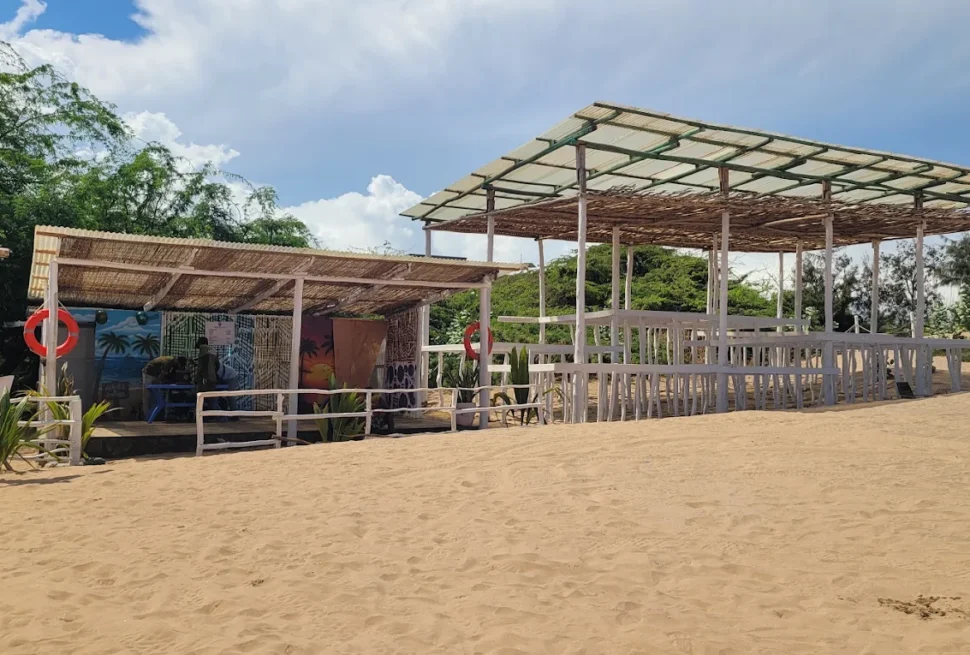
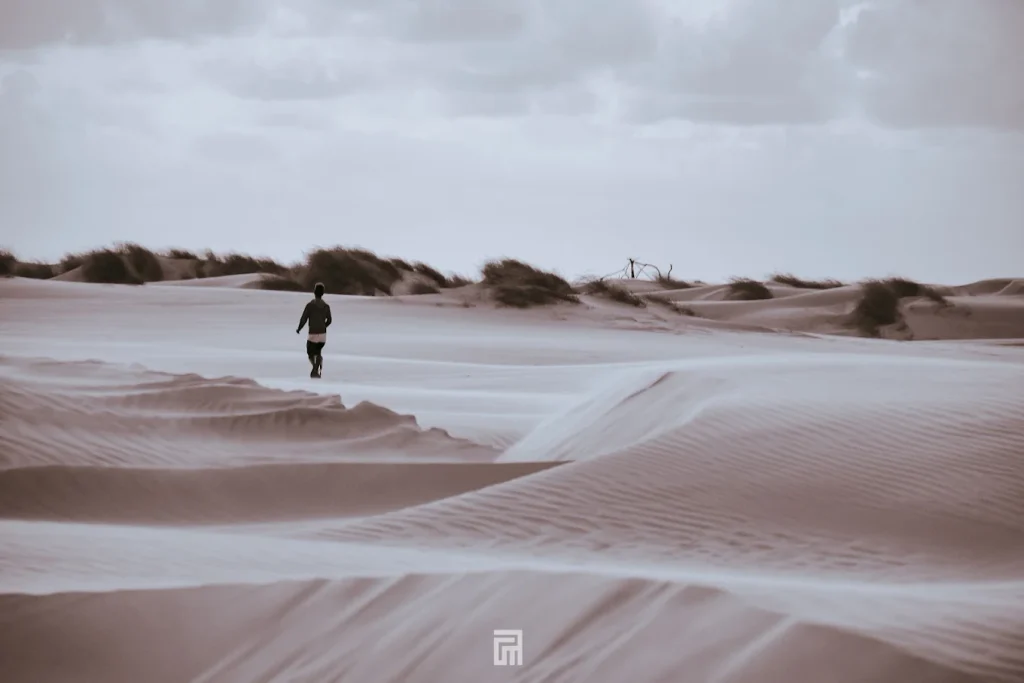
Watamu and Diani are reef-protected, turquoise, and increasingly busy. Mambrui is different. There is no protecting coral reef here, so the waves are bigger. The beach is long, wind-shaped, and often almost empty. You can walk for a long time and see only fishermen, a few kitesurfers, or a quad bike leaving tracks.
From the crest of a dune you get a 360-degree view: rolling sand, baobabs inland, the river mouth, and an open horizon of ocean. At sunrise or sunset the dunes turn deep gold. That is the shot everyone comes for.If you want a Kenya beach that still feels wild rather than packaged, this is it.
2. The Dunes Are Easy to Explore in One Day
You do not need an overnight stay. A well-planned Mambrui sand dunes day trip from Malindi fits into a morning or a late afternoon.Typical flow:
- Hotel or airport pickup in Malindi
- Short drive north over the Sabaki Bridge
- Community gate, scarf (arafat), and local guide
- Walk the dunes, climb a ridge, or ride a quad
- Beach time and photos
- Optional stop at the river mouth for birds (and, with luck, hippos)
Entry is community-managed. Expect around KSh 200 per person for the dunes, plus a guide fee of about KSh 500. Hiring an arafat (the traditional headscarf that keeps sand and sun off your face) is cheap and useful. Quad bikes are extra and usually priced by the hour. Confirm current rates on arrival or through a local organiser.
Wear sandals or shoes you can dump sand from. Bring sunglasses, sunscreen, water, and a hat. Midday heat on bare sand is intense; golden hour is kinder and better for photos.
3. Quad Biking Here Is Actually Scenic, Not Just Loud
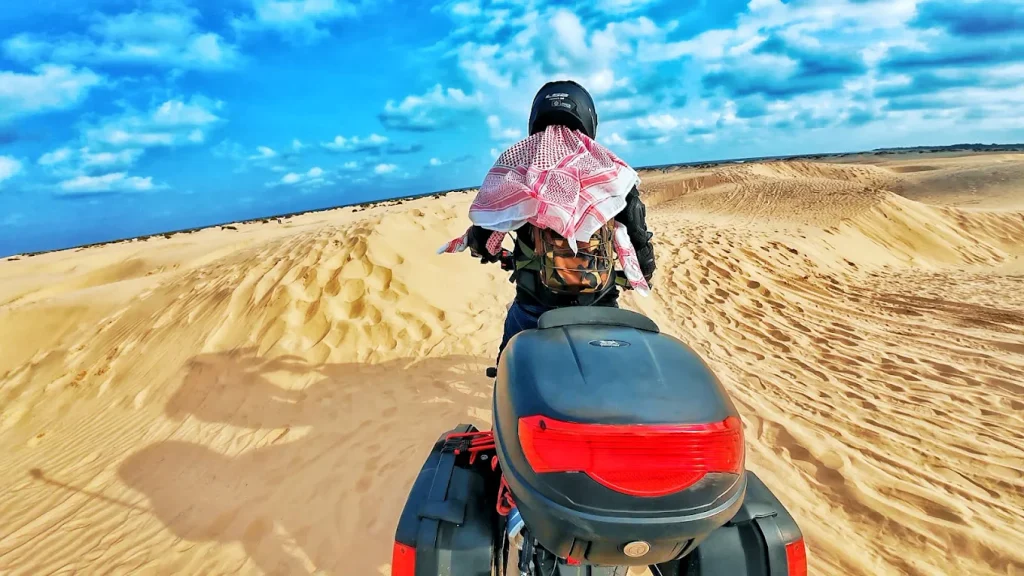
Quad biking is the activity most tour operators sell, and for good reason. Riding across the dunes with the ocean in the background is the “Little Dubai” moment. Some operators keep you on a short tourist loop. Ask to go further—toward the Galana delta or the emptier stretch heading north to Che Shale—if conditions and the guide allow.
You can also skip the engine. Walking the dunes is quieter and often more memorable. Sandboarding and simple dune rolling work well if you are with kids. The point is the landscape, not the vehicle.
4. Mambrui Has Real History, Not Just Sand
Before the dunes became a day-trip attraction, Mambrui was an important Swahili settlement. Archaeology dates occupation from at least the 12th–13th centuries through later centuries. Excavations around the Qubba Mosque area found house foundations, wells, kilns, iron slag, and large amounts of local pottery.
In 2010 a joint Kenyan–Chinese team found a Yongle Tongbao coin minted during the reign of China’s Yongle Emperor (1403–1424), plus porcelain linked to Longquan kilns that produced ware for the Ming court. Those finds sit in a larger debate about early Indian Ocean trade and whether Admiral Zheng He’s fleets reached this stretch of the Swahili coast. Ancient texts describe a powerful Malindi ruler near a river mouth—something modern Malindi town does not have, but Mambrui does.
You will not see a polished museum on site. What you get is atmosphere: an old mosque town, a cemetery with Chinese porcelain set into tombs, and the knowledge that this quiet village once sat on global trade routes.
5. The Sabaki River Mouth Adds Wildlife to a Beach Day
The drive itself is part of the trip. The highway is lined with baobabs. The Sabaki River irrigates plantations and then fans out into the ocean. The estuary can hold hippos, crocodiles, and flocks of coastal birds. Flamingos appear at times in the wider delta. Keep a respectful distance from wildlife and listen to your guide.
That mix—dunes, river, beach, birds—is rare on a single short outing from Malindi.
6. It Pairs Perfectly With Marafa (Hell’s Kitchen)
If you have a full day, combine Mambrui with Marafa Depression, also called Hell’s Kitchen. The canyon’s red, pink, and white sandstone walls look like another planet, especially at sunset. Many operators already sell the two together: dunes in the heat of the day, Marafa for late light. It is one of the strangest landscape pairings on the Kenyan coast—desert-meets-ocean, then inland badlands.
Gedi Ruins, Malindi old town, and Watamu Marine Park are also close enough to stitch into a longer north-coast itinerary.
7. Che Shale and the Empty North Coast
North of the main dune circuit the beach keeps going. Che Shale is a long-standing, low-key beach lodge that has drawn people looking for space rather than nightlife since the 1970s. The coastline toward Ngomeni feels cinematic: wind, wide sand, few buildings. If the main dune gate feels a little organised, this is the wilder continuation of the same landscape.
How to Get to Mambrui
From Malindi town: 20–50 minutes by car, tuk-tuk, or boda boda, depending on where you start and which dune access you use. A return tuk-tuk is often quoted around KSh 600, but prices move—agree before you leave.
From Malindi Airport: roughly 20–40 minutes.From Nairobi: fly to Malindi (about 1–1.5 hours), then transfer. Road or SGR to Mombasa plus a drive north is possible but makes a long day; overnighting in Malindi is saner.Carry ID. There can be a police check north of Malindi.Book a driver or a community organiser if you can. Local groups now run the site as a CBO, with guides, parking, and quad arrangements. Arriving with a plan beats negotiating everything in the sun.
Best Time to Visit Mambrui
Coast weather is warm year-round. The most comfortable windows are usually:
- June to October (cooler, drier)
- January to March (hot but relatively dry)
April and May bring heavier rain. Midday on the dunes is harsh in any season; morning and late afternoon are better for walking and photos.
What to Pack for a Mambrui Day Trip
- Light clothes and a long-sleeve layer for wind and sun
- Sunglasses and high-SPF sunscreen
- Water and snacks
- Sandals or shoes that empty easily
- Phone or camera with a spare battery (sand + glare drain both)
- Cash in Kenyan shillings for entry, guide, scarf, drinks, and tips
- A scarf or arafat if you do not want to hire one
Swim if conditions look safe, but treat this as a wild beach, not a lagoon. Currents and waves are stronger than in reef-sheltered Watamu.
Who Is Mambrui For?
Go if you want:
- Landscapes that do not look like every other Kenya beach photo
- A half-day or full-day trip from Malindi without a long transfer
- Photography, walking, or a short adrenaline hit
- A quieter alternative to crowded south-coast beaches
- A story that includes Swahili history and Indian Ocean trade, not only sand
Skip or shorten it if you want:
- Snorkelling over coral gardens (choose Watamu or Malindi Marine Park)
- A polished resort beach with loungers and cocktail service all day
- Shade and stillness at noon