Overshadowed by the snow-capped peak of Mt Kilimanjaro, Amboseli National Park offers one of Africa’s most famous safari views. However, there’s more to this dusty savannah than its panoramas. This is one of the best places to see elephants in East Africa – a result of a pioneering community-based approach to conservation that generates income for local people, better safari experiences for you, and a greater protection for wildlife.
Why Should I Visit Amboseli National Park?
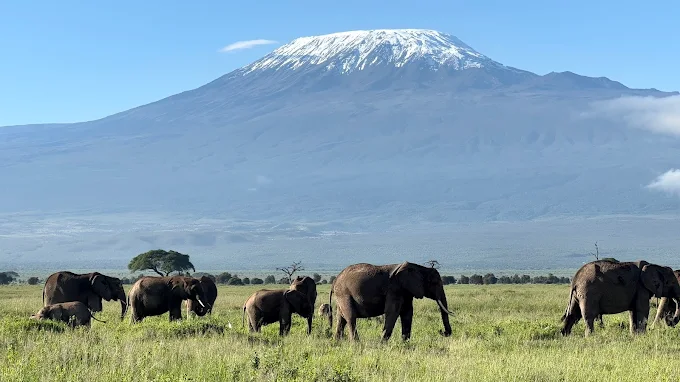
In two words: Kilimanjaro and elephants. The world’s tallest freestanding mountain, Kilimanjaro is one of Africa’s most iconic sights, and there are few places better than Amboseli for superb views of the mountain. Even better, Amboseli is the only established safari destination where you stand a good chance of capturing wildlife – most especially the park’s abundant elephants – in the same frame as that distinctive snowcapped dome.
While the prospect of seeing elephants below Kilimanjaro tops everybody’s Amboseli wish list, the park has plenty more to keep visitors interested. Lions are quite easily seen, along with buffalo, hippo, giraffe and large herds of wildebeest and zebra, and the wetlands support a dazzling array of water-associated birds. Other attractions include large seasonal flamingo flocks, superb sunsets filtered through a suspension of fine dust, and opportunities to interact with traditional Maasai people.
What Wildlife Can I Expect To See?
Amboseli offers arguably the finest elephant viewing in East Africa. Monitored by the Amboseli Elephant Research Project since 1975, the park has never experienced significant commercial poaching. For this reason, it supports some seriously impressive old tuskers, and the matriarchal herds are very relaxed. It’s great fun to watch old bull elephants foraging shoulder-deep in the marshes (also a favored haunt of buffalo and hippos) or family herds marching photogenically across the dusty plains.
Lions are quite common, but are seldom seen closely as they tend to be in the Masai Mara National Reserve. Other carnivores include cheetah, spotted hyena and black-backed jackal. Herds of wildebeest, zebra, Thomson’s gazelle, Grant’s gazelle and impala sweep across the dusty plains, while giraffes nibble at the canopy of acacia trees. Amboseli’s swamps and lakes offer superb bird watching – astute observers might identify 50 water-associated species over the course of a visit, and large flamingo flocks are often present.
When Is the Best Time To Visit?
Amboseli is rewarding throughout the year. The dry months (June to October and to a lesser extent January to February) typically offer the best wildlife viewing, as vegetation thins out and animals concentrate around the central swamps and lakes. But there’s also much to be said for visiting during the short rains (November and December) or long rains (March to May), when the scenery is greenest, the birdlife most varied and tourist numbers lowest. Mt Kilimanjaro is also most likely to emerge from its customary shroud of clouds – usually in the early morning or late afternoon – after rain.